
How to Set Up a Business in Spain Step by Step (For Beginners)
28 November, 2025
Understanding the Spanish Business Environment
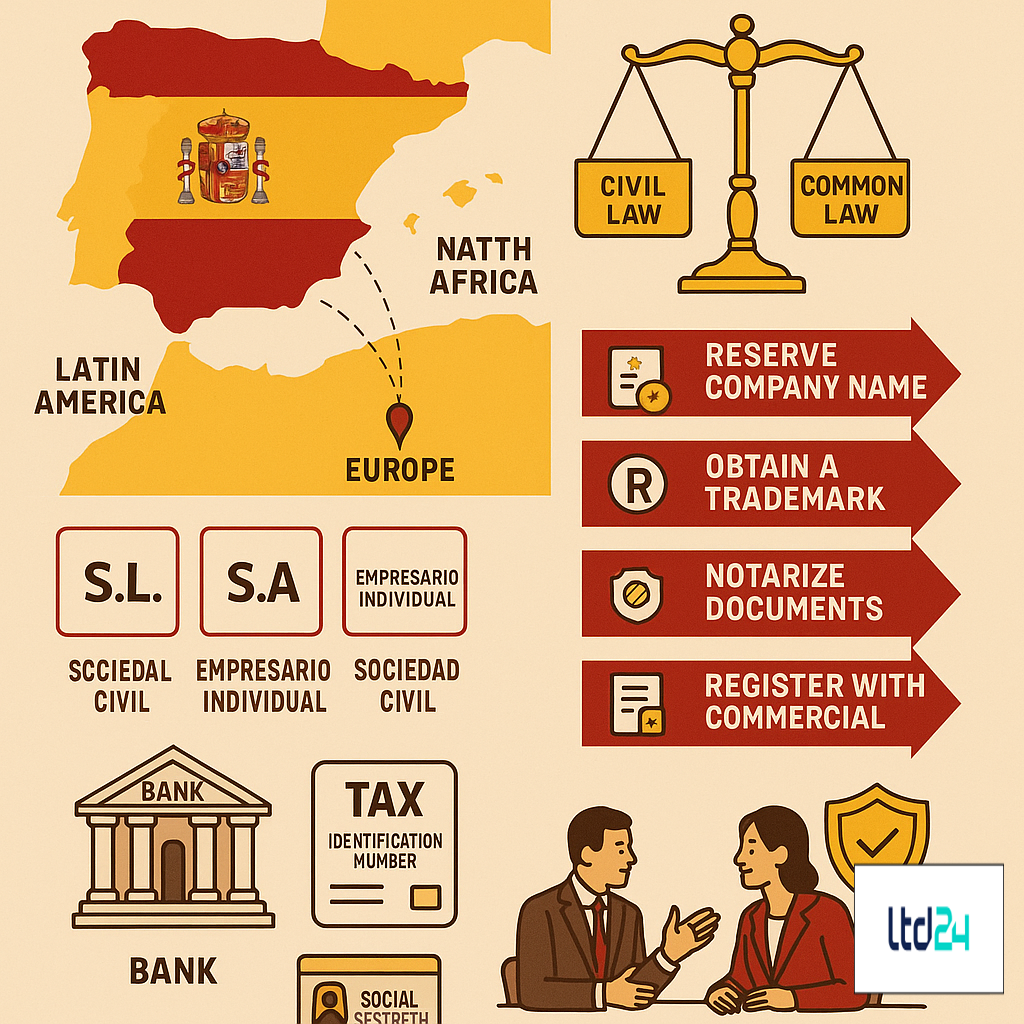
Spain has established itself as a premier destination for entrepreneurs seeking to expand their business operations within the European Union. The Iberian nation offers a strategic geographic location that serves as a gateway between Europe, North Africa, and Latin America, facilitating international commerce and market access. When establishing a business in Spain, it is crucial to comprehend the legal and fiscal framework that governs commercial activities. The Spanish business environment operates under a civil law system, distinguishable from the common law system prevalent in countries like the United Kingdom. This distinction impacts various aspects of business formation, including contractual obligations, corporate governance requirements, and dispute resolution mechanisms. Furthermore, Spain’s membership in the European Union provides businesses with access to the single market, offering significant advantages in terms of trade liberalization, regulatory harmonization, and cross-border operations. According to data from the Spanish Ministry of Economy, foreign direct investment in Spain has demonstrated consistent growth, with a notable increase of 52% in 2022, underscoring the country’s attractiveness for international business ventures.
Selecting the Right Legal Structure for Your Spanish Business
Choosing the appropriate legal structure is a foundational decision when establishing a business presence in Spain. The Spanish legal system offers various business structures, each with distinct characteristics regarding liability, taxation, capital requirements, and administrative obligations. The most common forms include the Sociedad Limitada (S.L.) or limited liability company, the Sociedad Anónima (S.A.) or public limited company, the Empresario Individual (sole proprietorship), and the Sociedad Civil (civil partnership). The S.L. structure is particularly popular among small to medium-sized enterprises due to its lower minimum capital requirement of €3,000 and simplified administrative procedures. Conversely, the S.A. format typically serves larger corporations with a minimum capital requirement of €60,000. When determining the optimal legal structure, entrepreneurs must evaluate factors such as business objectives, anticipated growth trajectory, risk tolerance, and tax implications. It is advisable to consult with legal and financial advisors specializing in Spanish corporate law to ensure alignment between the chosen structure and the business’s strategic objectives. This preliminary decision will significantly influence subsequent operational aspects, including corporate tax obligations, governance requirements, and potential for capital raising.
Registering Your Company Name and Trademark in Spain
Prior to formalizing your business registration in Spain, securing your company name and intellectual property rights represents a critical preliminary step. The process begins with a name reservation application to the Central Mercantile Registry (Registro Mercantil Central) in Madrid, where you must propose multiple potential company names, as availability cannot be guaranteed. The registry will conduct a comprehensive examination to ensure the proposed name does not infringe on existing registrations or protected trademarks. Upon approval, you will receive a name reservation certificate (Certificación Negativa de Denominación) valid for six months, with an option for a three-month extension. Beyond name registration, businesses should consider trademark protection through the Spanish Patent and Trademark Office (Oficina Española de Patentes y Marcas – OEPM) or the European Union Intellectual Property Office (EUIPO) for broader protection across EU member states. This proactive approach to intellectual property management helps safeguard your brand identity and prevents potential legal disputes. Additionally, domain name registration with the appropriate Spanish extension (.es) should be secured to establish your digital presence and maintain brand consistency across all channels. The registration process requires submission of company identification details and payment of applicable fees, which vary depending on the registration type and protection scope sought.
Opening a Corporate Bank Account in Spain
Establishing a corporate bank account constitutes an essential component of the business formation process in Spain. Spanish financial regulations mandate that companies maintain a designated corporate account for capital deposits, tax payments, and general business transactions. The account opening procedure typically requires physical presence at the chosen banking institution, though some banks have introduced digital onboarding options for certain client categories. To initiate the account opening process, you will need to present several key documents, including the company’s articles of incorporation (Escritura Pública), tax identification number (Número de Identificación Fiscal – NIF), director identification documents, proof of registered address, and in some cases, a certificate of good standing from your home country if you are a non-resident entrepreneur. Spanish banks vary significantly in their service offerings, fee structures, and international capabilities. Major institutions like Banco Santander, BBVA, CaixaBank, and Sabadell provide comprehensive corporate banking services, including international transfers, trade finance, and multi-currency accounts. When selecting a banking partner, consider factors such as branch network accessibility, digital banking capabilities, international transaction fees, and specialized services for your business sector. It is advisable to compare multiple banks and negotiate terms, as banking costs can impact your operational expenses substantially. Foreign entrepreneurs should note that anti-money laundering verification procedures in Spain are particularly stringent, requiring thorough documentation of the source of funds and beneficial ownership structures.
Obtaining the Necessary Tax Identification Numbers
Securing the appropriate tax identification numbers represents a fundamental prerequisite for legally operating a business in Spain. Spanish regulatory authorities require several distinct identifiers, each serving specific fiscal purposes. The primary identification requirement is the Número de Identificación Fiscal (NIF), which is mandatory for all business entities conducting operations within Spain. For limited companies (S.L. or S.A.), the NIF is issued following formal company registration with the Commercial Registry. Concurrently, non-resident directors and shareholders must obtain a Número de Identidad de Extranjero (NIE), the Spanish identification number for foreigners, which requires application through Spanish consulates abroad or directly through police stations with foreigner’s departments (Oficina de Extranjería) in Spain. Additionally, businesses engaged in commercial activities must register for Value Added Tax (IVA in Spanish) purposes, receiving a tax identification number that must appear on all invoices and official documentation. If the company intends to hire employees, registration with the Spanish Social Security system is mandatory, resulting in issuance of a Social Security contribution account code (Código de Cuenta de Cotización). The procurement of these various identification numbers typically involves interactions with multiple administrative bodies, including the Spanish Tax Agency (Agencia Tributaria), Social Security Treasury (Tesorería General de la Seguridad Social), and local municipal authorities. It is advisable to engage professional assistance to navigate this complex administrative landscape efficiently and ensure full compliance with all fiscal registration requirements.
Notarizing Your Company’s Deed of Incorporation
The formalization of a company’s legal existence in Spain necessitates the notarization of the deed of incorporation (Escritura de Constitución), a process that transforms the company from a conceptual entity into a legally recognized business. This pivotal step must be executed before a Spanish notary public (Notario), who serves as an impartial legal official authorized to authenticate documents and verify the legality of corporate formations. The deed of incorporation encompasses crucial elements including the company statutes (Estatutos), shareholder identification and capital contributions, appointment of directors, corporate governance provisions, and the company’s registered address. Prior to the notarial appointment, all founders must have secured their respective tax identification numbers and completed the bank deposit of the minimum required capital. During the notarization procedure, the notary will verify the identity of all participants, confirm legal compliance of the proposed company structure, and authenticate the documentation through official certification. The notary will subsequently issue certified copies of the deed and initiate the registration process with the Commercial Registry by transmitting the relevant documentation. Foreign entrepreneurs should note that all documents issued outside Spain must be properly legalized through apostille certification if originating from countries party to the Hague Convention or through full diplomatic legalization for documents from non-signatory countries. Additionally, documents in languages other than Spanish require official translation by a translator authorized by the Spanish Ministry of Foreign Affairs. The notarization costs are established by official fee schedules and vary according to the company’s capital value and the complexity of the corporate structure.
Registering with the Commercial Registry (Registro Mercantil)
Registration with the Commercial Registry (Registro Mercantil) represents the definitive legal step that formally establishes your company’s juridical personality in the Spanish business ecosystem. This registration process must occur within two months following the notarization of the company’s deed of incorporation. The procedure involves submitting comprehensive documentation to the provincial Commercial Registry office in your company’s jurisdiction, including the notarized deed of incorporation, evidence of tax identification number (NIF) issuance, proof of payment of the Asset Transfer Tax (Impuesto sobre Transmisiones Patrimoniales), and any additional sector-specific licenses or authorizations. Upon receipt of these documents, registry officials conduct a thorough examination to verify full compliance with Spanish corporate law and regulatory requirements. The registration review process typically extends from one to three weeks, contingent upon the registry’s current workload and the complexity of your business structure. Following successful registration, the Commercial Registry issues an official certificate confirming your company’s formal incorporation, complete with its permanent registration details. This registration provides your company with full legal capacity to enter contracts, acquire assets, assume liabilities, and engage in litigation. Furthermore, the registration details become publicly accessible information, enhancing transparency and facilitating business relationships with potential partners and clients. The registration fees are calculated based on a percentage of the company’s declared capital, with minimum and maximum thresholds established by regulation. Companies must also fulfill ongoing obligations to the Commercial Registry, including annual financial statement submissions and registration of significant corporate changes such as capital modifications, director appointments, or structural reorganizations.
Understanding Spanish Tax Obligations for Businesses
Navigating Spain’s tax system constitutes a fundamental aspect of business compliance that requires comprehensive understanding and strategic planning. Spanish businesses are subject to a multi-layered taxation framework administered primarily by the Spanish Tax Agency (Agencia Tributaria). The Corporate Income Tax (Impuesto sobre Sociedades) represents the principal direct tax levied on business profits, with a standard rate of 25% for most companies, though small and medium enterprises with turnover below €10 million may qualify for a reduced rate of 23% on the first €300,000 of taxable income. The Value Added Tax (Impuesto sobre el Valor Añadido – IVA) constitutes the main indirect tax, applied at three distinct rates: the standard rate of 21%, the reduced rate of 10% for specific goods and services including transportation and hospitality, and the super-reduced rate of 4% for essential items like food staples and pharmaceuticals. Businesses must also consider the Business Activity Tax (Impuesto sobre Actividades Económicas – IAE), although companies with turnover below €1 million are typically exempt. Additional fiscal obligations include Social Security contributions for employers, which amount to approximately 29.9% of employees’ gross salaries, and various local taxes such as property tax (Impuesto sobre Bienes Inmuebles – IBI) and municipal business tax. Spain maintains an extensive network of double taxation treaties that mitigate international tax burdens for businesses with cross-border operations. Compliance with Spanish tax regulations requires adherence to strict filing deadlines and reporting requirements, with severe penalties for non-compliance. Most companies must file quarterly VAT returns, annual corporate tax declarations, and periodic informative declarations regarding transactions with third parties. Engaging qualified tax advisors with expertise in Spanish fiscal legislation is strongly recommended to optimize tax positions and ensure full compliance with all applicable regulations.
Registering for Social Security and Hiring Employees in Spain
Employing staff in Spain necessitates navigation of a comprehensive social security framework and compliance with detailed labor regulations designed to protect workers’ rights. The initial step involves registering as an employer with the Spanish Social Security Treasury (Tesorería General de la Seguridad Social), which issues a contribution account code (Código de Cuenta de Cotización) unique to your business. This registration must occur prior to hiring your first employee and requires submission of company identification documents, deed of incorporation, and tax identification numbers. When hiring employees, employers must register each worker with the social security system within the legally prescribed period, typically before employment commencement. The Spanish employment landscape is governed by the Workers’ Statute (Estatuto de los Trabajadores) and applicable collective bargaining agreements that establish sector-specific conditions regarding working hours, minimum wages, holiday entitlements, and termination procedures. Employment contracts must conform to standardized models approved by the Spanish employment authorities, with various contract types available including permanent, temporary, and training contracts. Employer contributions to social security are substantial, typically approximating 29.9% of the employee’s gross salary, covering contingencies such as common illness, occupational accidents, unemployment benefits, vocational training, and pension contributions. Additionally, employers must implement workplace risk prevention measures and maintain accident insurance coverage. Companies with 50 or more employees face additional obligations, including the requirement to employ a minimum percentage of workers with disabilities. The administrative complexity of Spanish employment regulations often justifies engagement of specialized payroll services and labor consultants who can ensure compliance with evolving regulatory requirements and minimize the risk of significant penalties for non-conformity with labor laws.
Obtaining Industry-Specific Licenses and Permits
Depending on your business activities, securing sector-specific licenses and permits constitutes an essential compliance step before commencing operations in Spain. These authorizations are administered by various regulatory bodies at national, regional (Autonomous Communities), and municipal levels, creating a complex regulatory landscape that requires careful navigation. Most businesses must obtain a municipal operating license (Licencia de Apertura) from the local town hall (Ayuntamiento), which verifies compliance with urban planning regulations, safety standards, and environmental requirements. The application typically requires submission of technical projects prepared by authorized professionals, environmental impact assessments where applicable, and safety certificates. Certain sectors face particularly rigorous licensing requirements. Food and beverage establishments must secure health permits and register with sanitary authorities; financial services providers require authorization from the Spanish National Securities Market Commission (CNMV) or Bank of Spain; healthcare-related businesses need approval from regional health authorities; and tourism enterprises must register with regional tourism departments. Environmental permits are mandatory for activities with potential ecological impact, requiring detailed environmental management plans and often public consultation procedures. The processing timeframes for these permits vary significantly, from several weeks to many months depending on the license type and local administrative efficiency. Strategic planning is therefore essential, as operation without required authorizations may result in substantial fines, business closure orders, and potential criminal liability for directors. Foreign entrepreneurs may benefit from consulting specialized advisory firms with sector-specific expertise to identify all applicable permit requirements and develop comprehensive compliance strategies. Many Autonomous Communities have implemented simplified procedures for certain business categories under the "responsible declaration" (Declaración Responsable) framework, which allows operations to commence upon submission of required documentation, subject to subsequent verification by authorities.
Setting Up Your Spanish Business Location
Establishing an appropriate physical presence for your business operations in Spain requires strategic consideration of various factors including geographic location, regulatory requirements, and cost implications. Spain’s diverse regions offer distinct advantages: Madrid provides central access to the national market and hosts major corporate headquarters; Barcelona combines industrial strength with technological innovation; Valencia and Andalusia offer competitive operational costs; while northern regions like the Basque Country feature strong manufacturing traditions and access to European markets. When selecting premises, businesses must ensure compliance with urban zoning regulations (Plan General de Ordenación Urbana) that designate permissible activities in specific areas. Commercial leases in Spain typically run for five to ten years with mandatory minimum durations, often requiring bank guarantees equivalent to several months’ rent. The standard lease agreement (Contrato de Arrendamiento) should be comprehensively negotiated to address key aspects including rent review mechanisms, maintenance responsibilities, permitted modifications, and termination conditions. Prior to finalizing any location, verification of the property’s compliance with licensing requirements for your specific business activity is essential, particularly regarding technical specifications, accessibility standards, and environmental regulations. Foreign entrepreneurs should note that certain business activities may benefit from establishing operations in special economic zones (Zonas Francas) or technology parks that offer fiscal incentives, subsidized infrastructure, and administrative support services. Alternatively, during initial market entry or for businesses requiring minimal physical presence, virtual office solutions or business address services may provide cost-effective alternatives to traditional office leasing. Professional real estate advisors specializing in commercial properties can provide valuable guidance regarding market conditions, negotiation strategies, and regulatory compliance aspects of business premises in your target region.
Navigating Spanish Accounting and Financial Reporting Requirements
Compliance with Spanish accounting regulations and financial reporting obligations constitutes a fundamental aspect of business governance that demands meticulous attention and professional expertise. Spanish companies must adhere to the Spanish General Accounting Plan (Plan General de Contabilidad), which aligns with International Financial Reporting Standards (IFRS) while incorporating national specificities. The accounting framework categorizes businesses into different tiers based on size and economic significance, with corresponding reporting requirements of varying complexity. All companies must maintain standardized accounting records including a journal (Libro Diario), inventory and annual accounts (Libro de Inventarios y Cuentas Anuales), and VAT records (Libros de IVA). These accounting books must be legalized through the Commercial Registry either in physical format or through electronic filing systems. Annual financial statements comprising the balance sheet, profit and loss account, statement of changes in equity, cash flow statement (for larger entities), and explanatory notes must be prepared within three months following the fiscal year-end. These statements require approval by shareholders and subsequent filing with the Commercial Registry within one month after approval. Companies exceeding certain thresholds regarding turnover, assets, or employee numbers must submit to external audit requirements conducted by registered auditors (Auditores de Cuentas). Additionally, businesses must implement a chart of accounts conforming to the standardized structure established by regulatory authorities. The accounting period typically coincides with the calendar year, though companies may opt for alternative fiscal years with proper authorization. Non-compliance with accounting obligations can result in severe consequences, including substantial monetary penalties, restricted access to public contracts, and personal liability for directors. Given these complex requirements, most businesses engage professional accounting services with specific expertise in Spanish financial regulations to ensure compliance while optimizing financial management strategies.
Understanding Employment Contracts and Labor Laws in Spain
Spanish labor legislation provides a comprehensive framework governing employer-employee relationships, characterized by robust worker protections and detailed regulatory requirements. Employment contracts in Spain must conform to established legal models and clearly specify essential elements including job classification, remuneration structure, working hours, holiday entitlements, probationary periods, and termination conditions. The Spanish system recognizes various contract categories, including indefinite (permanent) contracts, temporary contracts for specific circumstances, training contracts for educational purposes, and part-time arrangements. Recent labor reforms have reinforced the presumption in favor of indefinite contracts, restricting the permissible grounds for temporary hiring. Working time regulations establish a maximum ordinary working week of 40 hours, with specific provisions regarding overtime limitations, minimum rest periods, and holiday entitlements (minimum 30 calendar days annually). Remuneration must respect the national minimum wage (Salario Mínimo Interprofesional) and applicable collective bargaining agreements (Convenios Colectivos) that establish sector-specific conditions and often mandate higher compensation than statutory minimums. Termination procedures are strictly regulated, with dismissals requiring justification based on objective grounds (economic, technical, organizational, or production-related) or disciplinary reasons, accompanied by appropriate notice periods and severance compensation. Collective redundancies affecting numerous employees trigger additional consultation requirements with worker representatives. Spain’s dual representation system enables employees to exercise their rights through both union representatives and works councils (Comités de Empresa) in larger companies. Employers must implement occupational risk prevention protocols, equality plans (mandatory for companies with 50+ employees), and maintain detailed employee records. Given the complexity and potential financial implications of non-compliance, businesses typically engage specialized human resources consultants familiar with Spanish labor practices to develop compliant employment policies and minimize litigation risks.
Setting Up Payroll and Compensation Structures
Implementing compliant payroll systems and effective compensation structures represents a critical operational aspect for businesses operating in Spain. The Spanish payroll framework involves multiple regulatory considerations, including alignment with labor legislation, collective bargaining agreements, tax withholding obligations, and social security contributions. Employers must issue standardized payslips (Nóminas) that clearly itemize all compensation components, deductions, and contributions in accordance with legal requirements. The typical Spanish compensation structure comprises fixed elements (base salary, position supplements, seniority bonuses), variable components (performance bonuses, commissions), statutory benefits (including two extra monthly payments known as "pagas extraordinarias"), and discretionary benefits (health insurance, pension contributions, meal vouchers). Payroll administration necessitates registration with tax authorities for withholding purposes and implementation of the appropriate tax withholding scale (IRPF retention) based on each employee’s personal circumstances and income level. These withholdings must be declared and remitted to tax authorities on a monthly or quarterly basis, depending on company size. Similarly, social security contributions must be calculated precisely, with the employer portion averaging approximately 29.9% of salary within established contribution bases, and employee withholdings approximating 6.35%. Specialized payroll software adapted to Spanish requirements typically facilitates these complex calculations and generates the mandatory documentation for regulatory compliance. Many businesses, particularly international companies entering the Spanish market, opt to outsource payroll administration to specialized service providers with expertise in Spanish labor regulations and tax requirements. These international payroll companies ensure accurate processing, timely submissions to authorities, and adaptation to frequent regulatory changes while allowing the business to focus on core operations. Regardless of the chosen approach, implementing robust internal controls and regular compliance audits is advisable to minimize the risk of administrative penalties and employee disputes regarding compensation calculations.
Opening for Business: Marketing and Customer Acquisition
Launching your business operations in Spain requires development of market-appropriate strategies for customer acquisition and brand establishment within the Spanish commercial landscape. Understanding Spanish consumer behavior is paramount, recognizing regional variations in preferences, purchasing patterns, and cultural sensitivities across diverse territories including Catalonia, Andalusia, and the Basque Country. Digital marketing strategies should prioritize mobile optimization, as Spain maintains one of Europe’s highest smartphone penetration rates at 93% according to the National Observatory of Telecommunications. Effective online presence requires adaptation to Spanish consumer habits, including prominent use of WhatsApp for business communications and preference for local payment methods like Bizum alongside international options. Social media strategies should emphasize platforms with strong Spanish user bases, including Instagram, Facebook, and increasingly TikTok, with content specifically tailored to Spanish cultural references and consumption patterns. Traditional marketing channels retain significant relevance in Spain, with regional newspapers, radio networks, and outdoor advertising providing effective touchpoints for many market segments. Additionally, relationship-building through personal connections and networking remains fundamentally important in Spanish business culture, often necessitating face-to-face meetings to establish trust before significant commercial engagements. Spanish consumers typically value price-quality relationships rather than absolute cost, with strong emphasis on trust signals including transparent communication and responsive customer service. When developing pricing strategies, businesses should account for regional economic variations, with significantly different purchasing power between metropolitan centers like Madrid and Barcelona compared to rural areas. For business-to-business ventures, industry-specific trade shows and professional associations provide valuable platforms for market entry and relationship development with potential partners and clients. Engaging local marketing professionals familiar with Spanish consumer psychology and regional nuances can substantially accelerate market penetration and brand acceptance within this diverse and sophisticated European market.
Ensuring Compliance with Data Protection Regulations
Adherence to data protection regulations constitutes a non-negotiable compliance obligation for businesses operating in Spain. The regulatory framework is primarily governed by the General Data Protection Regulation (GDPR) as implemented throughout the European Union, supplemented by Spain’s Organic Law on Data Protection and Digital Rights Guarantee (LOPDGDD). This legislative structure imposes stringent requirements regarding the collection, processing, storage, and transmission of personal data. Companies must establish legitimate legal bases for data processing activities, such as explicit consent, contractual necessity, legal obligations, or legitimate interests, with each basis carrying specific implementation requirements. The appointment of a Data Protection Officer (DPO) is mandatory for public authorities and organizations whose core activities involve large-scale monitoring or processing of special categories of data. Spanish implementation introduces additional specifications regarding DPO qualifications and registration requirements with the Spanish Data Protection Agency (Agencia Española de Protección de Datos – AEPD). Businesses must maintain comprehensive records of processing activities, implement appropriate technical and organizational security measures, and conduct data protection impact assessments for high-risk processing operations. Privacy policies and consent mechanisms must be transparent, accessible, and drafted in clear language, with Spanish authorities paying particular attention to cookie consent implementations on digital platforms. Data breach notification protocols must enable reporting to the AEPD within 72 hours of discovery for incidents posing risks to individual rights. International data transfers face additional restrictions, requiring appropriate safeguards such as Standard Contractual Clauses or Binding Corporate Rules following the invalidation of the Privacy Shield framework. Non-compliance with these regulations can result in substantial administrative fines reaching up to €20 million or 4% of global annual turnover, alongside potential civil liability and reputational damage. Given the complexity of these requirements, businesses typically benefit from specialized legal counsel to develop comprehensive data protection compliance programs adapted to their specific operational context in the Spanish market.
Understanding Spanish Business Insurance Requirements
Securing appropriate insurance coverage constitutes both a legal requirement and a prudent risk management strategy for businesses operating in Spain. The Spanish regulatory framework mandates several compulsory insurance policies depending on the nature of business activities. Employers’ Liability Insurance (Seguro de Responsabilidad Civil Patronal) is obligatory for all companies with employees, covering workplace accidents and occupational illnesses beyond the basic social security coverage. Specific industry sectors face additional mandatory insurance requirements: construction companies must maintain decennial liability insurance (Seguro Decenal) covering structural defects; automotive businesses require garage-keepers liability coverage; professional service providers such as architects, engineers, and medical practitioners must secure professional indemnity insurance; and hospitality establishments need public liability policies with specified minimum coverage thresholds. Beyond statutory requirements, prudent business management typically involves obtaining several discretionary insurance products. Commercial Property Insurance (Seguro de Comercio) protects business premises and contents against risks including fire, water damage, theft, and vandalism. Business Interruption Coverage (Seguro de Pérdida de Beneficios) provides financial protection against revenue losses resulting from covered property damage events. Product Liability Insurance (Seguro de Responsabilidad Civil de Productos) offers protection against claims arising from defective products causing third-party injury or property damage. Directors and Officers Liability Insurance (Seguro de Responsabilidad Civil para Administradores y Directivos) shields company leaders from personal liability arising from management decisions. When selecting insurance providers, businesses should evaluate financial stability ratings, claims processing reputation, policy exclusions, and premium structures. International companies may consider global insurance programs with local policies issued in Spain to ensure regulatory compliance while maintaining consistent worldwide coverage. Working with specialized insurance brokers familiar with the Spanish market can facilitate identification of appropriate coverage levels, negotiation of favorable terms, and ongoing policy management as business operations evolve. Regular insurance audits are advisable to ensure coverage remains aligned with changing business activities and emerging risks in the Spanish operational environment.
Banking Operations and Financial Management in Spain
Effective financial management for businesses operating in Spain requires comprehensive understanding of the local banking system, payment practices, and treasury optimization strategies. The Spanish banking sector, dominated by major institutions including Santander, BBVA, CaixaBank, and Sabadell, offers sophisticated corporate banking services aligned with European standards. Businesses typically maintain multiple banking relationships: primary operational accounts for day-to-day transactions, specific accounts for tax and social security payments, and strategic relationships for financing needs and international operations. The Single Euro Payments Area (SEPA) facilitates efficient euro-denominated transfers throughout the European Union, while traditional payment methods including bank transfers (transferencias bancarias) and direct debits (domiciliación bancaria) remain predominant in business-to-business transactions. Cash management strategies should address Spain’s relatively extended payment terms, with commercial transactions frequently structured on 60-90 day payment cycles despite EU late payment directives. This practice necessitates robust working capital management and potentially invoice discounting facilities to maintain adequate liquidity. Credit facilities commonly available to established Spanish businesses include overdraft arrangements (líneas de crédito), term loans (préstamos), invoice discounting (descuento de facturas), factoring, and confirming services (a reverse factoring mechanism widely used in Spain). Trade finance instruments including letters of credit and bank guarantees support international commercial activities. Digital banking platforms have transformed financial operations, with advanced treasury management systems enabling cash pooling, automated reconciliation, and liquidity forecasting functionalities. However, certain banking procedures still require physical documentation and qualified signatures, particularly for significant transactions or credit applications. Foreign exchange risk management merits particular attention for businesses with revenue or cost exposures outside the eurozone, with hedging instruments including forwards, options, and swaps available through major Spanish banks. Businesses should establish robust internal controls for banking operations, implementing dual authorization protocols for significant transactions and regular account reconciliation procedures to detect potential irregularities promptly. Professional treasury management, potentially supported by external financial advisors, can optimize interest earnings, minimize transaction costs, and ensure efficient deployment of financial resources within the Spanish business context.
Managing Spanish Corporate Governance and Compliance
Maintaining robust corporate governance practices and ensuring regulatory compliance are fundamental responsibilities for business entities operating in Spain. Spanish corporate governance is primarily regulated through the Companies Act (Ley de Sociedades de Capital), the Commercial Code (Código de Comercio), and the Good Governance Code for Listed Companies (Código de Buen Gobierno de las Sociedades Cotizadas) for publicly traded entities. Limited liability companies (S.L.) typically adopt simpler governance structures with a sole administrator (Administrador Único) or joint administrators (Administradores Mancomunados), while larger corporations often implement board structures (Consejo de Administración) with formalized procedures for meetings and decision-making processes. Directors’ duties under Spanish law encompass fiduciary obligations of loyalty, diligence, and confidentiality, with potential personal liability for breaches resulting in company damages. The preparation and filing of annual accounts represent critical compliance obligations, with documentation requiring approval by shareholders and subsequent submission to the Commercial Registry within established deadlines. Annual shareholders’ meetings must be convened within six months following the fiscal year-end to approve accounts, determine profit allocation, and address other statutory matters. Companies exceeding specific thresholds regarding turnover, assets, or employee numbers face mandatory external audit requirements, necessitating appointment of registered auditors. Beyond financial reporting, businesses must maintain statutory books including shareholders registers, board meeting minutes, and contracts with related parties. Corporate compliance programs addressing anti-corruption, money laundering prevention, and whistleblower protection have gained increasing importance in the Spanish regulatory environment, particularly following legislative changes introducing potential criminal liability for legal entities. Implementation of compliance policies should be adapted to the company’s risk profile, size, and sector-specific regulations. Regular corporate health checks conducted by legal and financial advisors can identify potential governance weaknesses and compliance gaps before they escalate into significant issues. For multinational groups, balancing Spanish legal requirements with global corporate governance standards requires careful structuring of reporting lines, delegation of authority, and internal control systems to ensure both local compliance and alignment with international best practices.
Planning for Business Expansion and Growth in Spain
Developing a strategic framework for business expansion in the Spanish market requires comprehensive planning across multiple dimensions including geographic coverage, service diversification, talent acquisition, and capital structure optimization. Spain’s diverse regional economies present distinct growth opportunities: Madrid offers a concentrated business ecosystem with high-value service sectors; Barcelona combines technological innovation with industrial strength; Valencia and Andalusia provide cost-effective operational bases; while northern regions feature manufacturing excellence and export infrastructure. Expansion strategies frequently adopt phased approaches, establishing initial operations in primary business centers before extending to regional markets as operational capabilities mature. Organic growth can be accelerated through various mechanisms including strategic acquisitions of complementary businesses, joint venture formations with established Spanish entities, and commercial partnerships leveraging existing market presence and distribution networks. The Spanish merger and acquisition landscape involves specific legal procedures regarding due diligence, asset transfers, and regulatory approvals that require specialized advisory support. Talent acquisition represents a critical growth enabler, with competitive recruitment strategies addressing both experienced professionals and emerging talent from Spain’s prestigious business schools and technical universities. Spanish labor regulations regarding employment contracts and collective agreements should inform workforce expansion planning. Securing appropriate financing for growth initiatives typically involves combinations of traditional bank lending, increasingly active private equity investors, public funding programs, and potentially capital markets for larger enterprises. Spain’s ecosystem of growth-oriented financial support includes programs through the Official Credit Institute (Instituto de Crédito Oficial), ENISA (Empresa Nacional de Innovación), and various regional development agencies offering subsidized financing for business expansion meeting specific criteria. Additionally, expanding companies should consider potential tax incentives available for R&D investments, job creation in designated areas, and specific industry sectors such as technology and renewable energy. International businesses should develop localization strategies addressing Spanish consumer preferences, business customs, and regulatory requirements, potentially adapting product specifications, marketing approaches, and operational models to maximize market acceptance and competitive positioning within this dynamic European economy.
Addressing Potential Challenges and Contingency Planning
Anticipating potential obstacles and developing robust contingency strategies constitutes essential business planning for operations in Spain. Bureaucratic complexity represents a significant challenge, with administrative procedures often involving multiple government agencies, document notarization requirements, and potential processing delays. Establishing relationships with local advisors familiar with administrative processes and potentially engaging administrative management services can mitigate these challenges. Spain’s multilingual environment presents communication challenges, particularly in regions with co-official languages such as Catalonia, the Basque Country, and Galicia, where documentation may require translation into both Castilian Spanish and regional languages to ensure full regulatory compliance and market acceptance. Labor market rigidity constitutes another consideration, with Spanish employment legislation providing substantial worker protections regarding termination procedures, working time regulations, and collective bargaining rights. Businesses should develop flexible workforce management strategies incorporating temporary contracts, professional services arrangements, and outsourcing options for fluctuating operational requirements. Economic volatility affects different Spanish regions unevenly, necessitating geographic diversification strategies to mitigate exposure to localized economic downturns. Comprehensive insurance coverage including business interruption protection provides financial safeguards against operational disruptions. Cash flow management merits particular attention due to extended payment terms prevalent in Spanish commercial practice, with potential mitigation through factoring services, early payment discounts, and robust credit control procedures. Tax and regulatory changes occur frequently within the Spanish system, requiring ongoing monitoring systems and professional advisory relationships to ensure continued compliance with evolving requirements. Cybersecurity and data protection challenges have intensified with increasing digitalization, demanding implementation of robust technical measures, staff training programs, and incident response protocols aligned with Spanish regulatory expectations. For international businesses, currency fluctuation risks may arise from operations outside the eurozone, necessitating hedging strategies or natural hedges through balanced revenue and cost structures. Business continuity planning should address both operational risks specific to Spain, such as regional political developments and industrial action patterns, and global considerations including supply chain resilience, geopolitical disruptions, and pandemic contingencies to ensure sustainable business operations under varying circumstances.
Leveraging Business Support and Networking Opportunities
Accessing Spain’s extensive ecosystem of business support services and professional networks can significantly accelerate market establishment and growth trajectories. The Spanish government operates numerous agencies supporting business development, including ICEX (España Exportación e Inversiones) providing market intelligence and internationalization assistance, CDTI (Centro para el Desarrollo Tecnológico Industrial) offering technological development funding, and regional investment promotion agencies such as Madrid Network, ACCIÓ in Catalonia, and IVACE in Valencia. These institutions provide valuable services including market research, regulatory guidance, partnership facilitation, and in some cases, financial support through grants and subsidized financing. Industry-specific associations and chambers of commerce constitute essential networking platforms, with organizations such as the Spanish Chamber of Commerce, American Chamber of Commerce in Spain, and British Chamber of Commerce in Spain offering member services including business matchmaking, regulatory updates, and advocacy representation with government authorities. Professional service networks including legal, accounting, and consulting firms with specialized Spanish market expertise provide critical support for navigating complex regulatory landscapes and identifying strategic opportunities. Spain’s dynamic entrepreneurial ecosystem features numerous business incubators, accelerators, and innovation hubs, including notable examples such as Barcelona Tech City, Madrid International Lab, and Valencia Activa, offering structured development programs, mentoring relationships, and potential investor introductions. Networking events, trade shows, and industry conferences represent valuable platforms for relationship building with potential clients, suppliers, and strategic partners, with Spanish business culture placing significant emphasis on personal connections and trust development through face-to-face interactions. Digital platforms including LinkedIn maintain high professional usage in Spain, enabling targeted networking approaches with industry leaders and decision-makers. For businesses seeking international expansion beyond Spain, the country’s strong historical and cultural connections with Latin America provide potential gateway advantages, with numerous Spanish consulting firms specializing in facilitating market entry strategies across Spanish-speaking markets worldwide. Strategic participation in these support ecosystems should be aligned with specific business objectives, whether focused on client acquisition, supplier development, technical collaboration, or investment attraction within the diverse Spanish commercial landscape.
Expert Guidance: Navigating Spanish Business Formation Successfully
At LTD24, we recognize that establishing a business in Spain represents a significant strategic opportunity that demands expert navigation through complex regulatory frameworks and cultural nuances. Our international business consultancy specializes in guiding entrepreneurs and corporations through every phase of Spanish business formation, from initial structural decisions to operational implementation. Our team of specialists combines profound knowledge of Spanish corporate law, taxation regulations, and administrative procedures with practical experience supporting diverse business formations across multiple sectors. We provide comprehensive support for determining optimal legal structures, securing necessary registrations and permits, establishing compliant financial systems, and developing effective market entry strategies tailored to your specific business objectives in the Spanish market. Through our established relationships with Spanish notaries, commercial registries, banking institutions, and regulatory authorities, we streamline administrative processes that frequently challenge foreign entrepreneurs entering this sophisticated European market. Our international tax consulting services ensure strategic alignment between Spanish operations and global corporate structures, optimizing fiscal positions while maintaining full regulatory compliance. Beyond formation services, we offer ongoing compliance support, management accounting services, and strategic advisory to facilitate sustainable business growth in Spain. With LTD24 as your trusted advisor, you gain not merely technical assistance but a strategic partner committed to your business success in the dynamic Spanish marketplace. We invite you to contact our specialist team for a personalized consultation regarding your Spanish business formation objectives and how our expertise can support your successful market entry and development in this key European economy.
Taking Your Business Forward in Spain
As you progress through the company formation process in Spain, maintaining momentum toward operational readiness and market development becomes increasingly important. Establishing effective banking relationships constitutes a critical component, with careful selection of financial partners offering appropriate services for your business model, including international transfer capabilities, multi-currency accounts, and digital banking platforms suited to your operational needs. Simultaneously, implementing robust accounting systems aligned with Spanish reporting requirements ensures financial compliance from inception, preferably utilizing software solutions specifically adapted to Spanish tax regulations and reporting formats. Recruitment of key personnel should address both technical competencies and cultural alignment, recognizing the importance of language capabilities and understanding of local business practices. Many international businesses benefit from engaging experienced Spanish managers in leadership positions to navigate local market dynamics effectively. Digital infrastructure development requires attention to Spanish technological preferences and regulatory requirements, including Spanish-language website versions, localized e-commerce capabilities if applicable, and technology systems configured for compliance with Spanish invoicing standards and data protection obligations. Setting up comprehensive insurance coverage tailored to Spanish requirements provides protection against operational risks, while establishing relationships with local suppliers and service providers creates operational resilience. Regular consultation with legal, financial, and tax advisors ensures continued compliance with evolving regulatory requirements and identification of optimization opportunities. As operations stabilize, developing comprehensive growth plans addressing potential geographic expansion, service diversification, and strategic partnerships can maximize the substantial opportunities presented by Spain’s dynamic market and strategic position within European and global trade networks. With methodical implementation of these foundational elements and strategic vision for future development, your Spanish business entity can evolve from initial formation to sustainable commercial success in this sophisticated European economy.
Expert Support for Your Spanish Business Venture
Navigating the complexities of Spanish business formation requires specialized expertise and local knowledge. If you’re seeking professional guidance for establishing and operating your business in Spain, we invite you to leverage our international business advisory capabilities at LTD24.
We are a boutique international tax consulting firm with advanced expertise in corporate law, tax risk management, asset protection, and international auditing. Our team specializes in creating tailored solutions for entrepreneurs, professionals, and corporate groups operating across global markets, including Spain and the broader European Union.
Schedule a personalized consultation with one of our international business specialists at a rate of 199 USD/hour and receive concrete answers to your Spanish business formation questions and strategic guidance for your market entry plans. Our expertise can significantly reduce administrative complexities, optimize your tax position, and accelerate your path to operational success in Spain.
Book your expert consultation today: https://dash.ltd24ore.com/book_consultancy

M. Ángeles is a Secretary at Ltd24, where she manages administrative operations and oversees the incorporation of companies in various countries. She holds a degree in Business Administration and Management from Spain and provides multilingual support to her clients, ensuring efficiency and accuracy in all operational processes. Thanks to her expertise in international corporate documentation, she is also a specialist in regulatory compliance and anti-money laundering, advising professionals and businesses in the UK and European markets. In her free time, M. Ángeles enjoys learning languages.


Comments are closed.