
Can I Claim My Car On My Taxes?
3 December, 2025
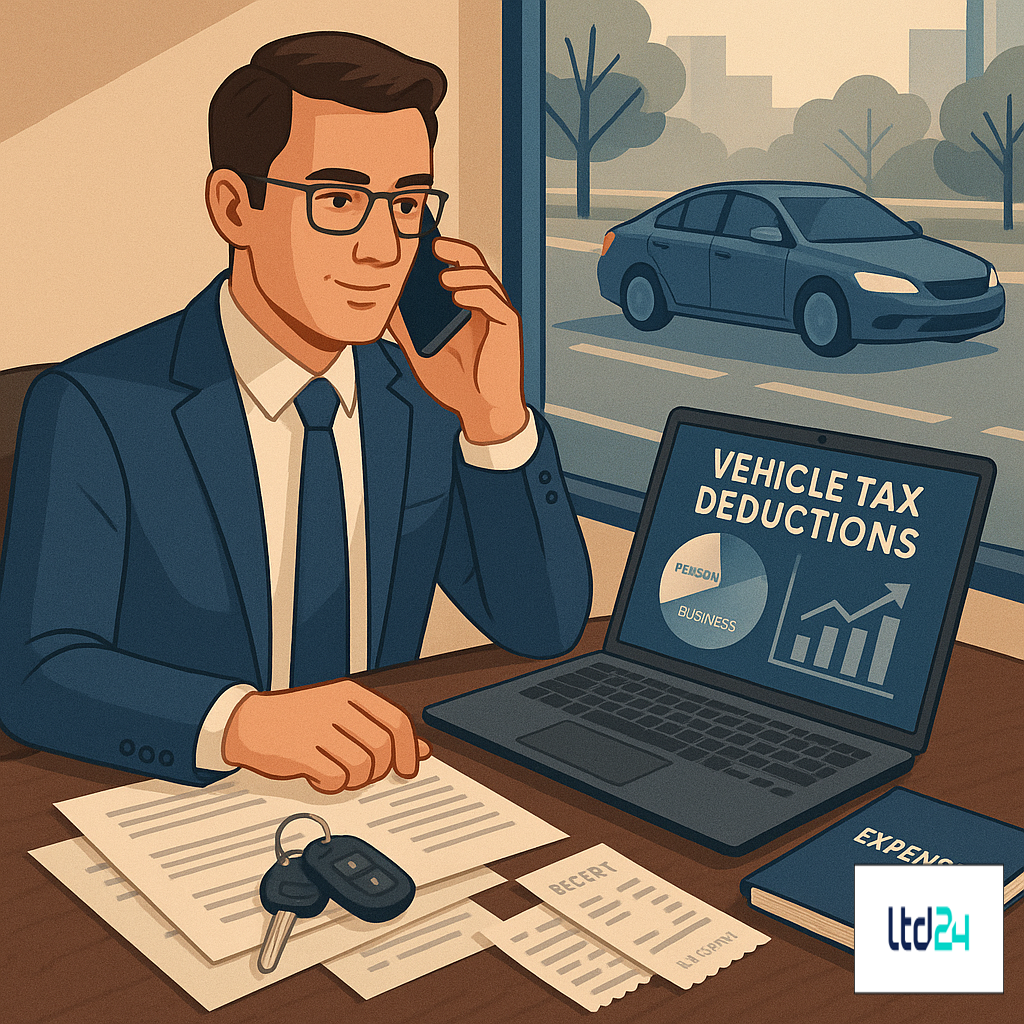
Understanding Vehicle Tax Deductions: The Fundamentals
The question of whether you can claim your car on your taxes is one that many taxpayers grapple with annually. Vehicle-related tax deductions represent a significant opportunity for tax savings, particularly for business owners, self-employed individuals, and employees who use their personal vehicles for work purposes. The taxation framework in most jurisdictions, including the UK and US, provides specific provisions for claiming vehicle expenses on tax returns. However, the eligibility criteria, documentation requirements, and permissible deduction methodologies vary substantially based on the taxpayer’s status, the nature of vehicle usage, and the applicable tax legislation. It’s crucial to understand that vehicle tax deductions are subject to rigorous scrutiny by tax authorities, necessitating meticulous record-keeping and adherence to regulatory guidelines to substantiate claims and avoid potential penalties for non-compliance. The fundamental principle underlying vehicle tax deductions is the differentiation between personal and business-related usage, with only the latter qualifying for tax relief under prescribed parameters.
Business vs. Personal Use: The Critical Distinction
The cornerstone of vehicle tax deductibility lies in the clear demarcation between business and personal use. Tax authorities worldwide unequivocally stipulate that only business-related vehicle expenses are eligible for tax relief. This necessitates a comprehensive understanding of what constitutes legitimate business usage. Business-related driving typically encompasses travel between different work locations, client meetings, business conferences, procurement of business supplies, and other activities directly related to income generation or business operations. Conversely, commuting between home and a regular workplace is generally classified as personal travel and is not tax-deductible. This distinction becomes particularly nuanced for individuals working from home offices, where the determination of business travel requires careful assessment. The burden of proof rests with the taxpayer to substantiate the business nature of vehicle usage through detailed contemporaneous records, including mileage logs, receipts, and documentation of the business purpose for each journey. For entrepreneurs managing UK company taxation, establishing clear policies regarding vehicle usage can facilitate compliance and optimize tax benefits.
Available Deduction Methods: Mileage vs. Actual Expenses
Taxpayers typically have two primary methodologies for claiming vehicle expenses on their tax returns: the mileage allowance and the actual expenses method. The mileage allowance approach involves multiplying the business mileage by a predetermined rate established by tax authorities. For instance, as of 2023, the HMRC approved mileage allowance payment (AMAP) rates in the UK stand at 45p per mile for the first 10,000 business miles and 25p thereafter for cars and vans, while the IRS mileage rate in the US is 65.5 cents per business mile. This method simplifies record-keeping requirements but may not optimize tax benefits for vehicles with high operational costs. Conversely, the actual expenses method entails calculating the business percentage of the total vehicle expenses, including fuel, insurance, maintenance, repairs, depreciation, lease payments, road tax, MOT, and finance charges. This approach necessitates more detailed record-keeping but may yield superior tax benefits for newer or more expensive vehicles. The selection between these methodologies should be based on a comparative analysis of the potential tax benefits, considering the specific circumstances of the taxpayer and the nature of vehicle usage. For businesses contemplating UK company incorporation and bookkeeping services, integrating vehicle expense management into the accounting framework is advisable.
Self-Employed Individuals: Maximizing Vehicle Tax Benefits
Self-employed individuals, including sole traders, freel

Marcello is a Certified Accountant at Ltd24, specialising in e-commerce businesses and small to medium-sized enterprises. He is dedicated to transforming complex financial data into actionable strategies that drive growth and efficiency. With a degree in Economics and hands-on expertise in accounting and bookkeeping, Marcello brings clarity and structure to every financial challenge. Outside of work, he enjoys playing football and padel.


Comments are closed.